Backrooms
Full scene-by-scene recap with analysis.
Full Recap
The story begins in 1990 with a man named Naren Warne, an explorer working for a secretive scientific organization known as the Async Research Institute. Async has discovered a hidden dimension existing alongside reality. Through a specialized doorway called the Threshold, researchers can physically enter this strange alternate world, which they call "the Complex." The public would later know it as the Backrooms. Inside, Naren documents endless hallways lined with faded yellow wallpaper, buzzing fluorescent lights, and damp carpets that stretch beyond comprehension. The architecture obeys no known laws of physics. Rooms connect in impossible ways, and there appears to be no beginning or end. During his expedition, something encounters Naren deep within the maze. His footage abruptly ends, and he is never seen again. His disappearance becomes the first known tragedy connected to the Backrooms. Decades later, the story shifts to Clark, a struggling furniture store owner played by Chiwetel Ejiofor. Once an aspiring architect, Clark's life has fallen apart. He is divorced, battling alcoholism, and sleeping inside his failing furniture business, Cap'n Clark's Ottoman Empire. Despite his humor and outward confidence, he is deeply unhappy and increasingly isolated. Clark regularly attends therapy sessions with Dr. Mary Kline, a compassionate therapist who attempts to help him confront the emotional damage caused by years of resentment and self-destructive behavior. One night, an electrical issue sends Clark into the store's basement. While investigating, he discovers an unusual set of switches connected to nothing. Later, curiosity draws him back. There, hidden behind a wall, he notices a faint yellow glow. When he pushes against the wall, it opens. Behind it lies the Backrooms. Clark steps into a world that should not exist. The endless corridors seem alive with an unsettling hum. There are no windows, no exits, and no clear sense of direction. Every room feels familiar yet completely wrong. As he explores, Clark discovers evidence that others have been here before. Async Research Institute symbols and abandoned equipment suggest organized expeditions have taken place throughout the maze. Then he notices movement. Something is watching him. Terrified, Clark escapes and returns to reality. When he tells Mary what happened, she assumes he is suffering from alcohol withdrawal hallucinations. Although she genuinely wants to help him, she cannot accept his story as reality. Clark knows what he saw. And he decides to go back. Determined to prove the Backrooms exist, Clark convinces his employees, Kat and Bobby, to join him on a second expedition. Armed with cameras and supplies, the group enters the maze together. Initially, everything appears manageable. They document rooms, mark walls, and attempt to map their surroundings. Then disaster strikes. Without warning, Bobby is violently dragged away by an unseen force. The rope connecting him to the others snaps taut, pulling everyone through a series of corridors at terrifying speed. Moments later, Bobby disappears entirely. Clark and Kat become separated amid the chaos. As Clark searches for his friends, he encounters disturbing humanoid creatures lurking within the maze. Their appearance resembles humans, but subtle distortions reveal that they are something else entirely. Lost and alone, Clark disappears into the Backrooms. Back in the real world, Dr. Mary Kline receives a voicemail from Clark. His message is chillingly calm. He tells her he is never coming back. Realizing something is terribly wrong, Mary travels to the furniture store and discovers the hidden entrance in the basement. Against all logic, she enters the Backrooms alone. Meanwhile, the film introduces Phil, a scientist working for Async Research Institute. Through surveillance equipment installed inside the Backrooms, Phil has been observing Clark's movements and monitoring developments from afar. As Mary ventures deeper into the maze, fragments of her own past begin resurfacing. Mary's journey through the Backrooms becomes increasingly personal. Through flashbacks, viewers learn that her mother suffered from severe schizophrenia. During Mary's childhood, their home became a prison-like environment where windows were covered and the outside world was shut away. Mary spent years trapped in rooms that felt disconnected from reality. The similarities between her childhood home and the Backrooms become impossible to ignore. Both are enclosed worlds without escape. Both are built from fear. Both are places where memory becomes architecture. The Backrooms force Mary to confront emotional wounds she has spent her life trying to understand. Eventually, Mary finds Clark. But the man she encounters is no longer the person she knew. Clark captures her and brings her to a bizarre living space he has created within the Backrooms. Furniture is arranged to resemble a home, and several silent humanoid figures sit around a dining table. These creatures are known as Still Lifes. Clark reveals the horrifying truth about the Backrooms. According to him, the dimension recreates people based on memory. Every person who enters leaves behind an imperfect copy. These copies resemble humans but lack genuine emotion, pain, and individuality. To demonstrate, Clark injures one of the creatures. It barely reacts. Then he reveals an even darker secret. Inside a refrigerator rests Kat's severed head. The Backrooms have consumed everything Clark once cared about. Mary attempts to reason with Clark using the same therapeutic techniques she employed during their sessions. Rather than physically fighting him, she tries to reconnect him with reality. Clark responds by unleashing years of bottled-up anger. He speaks about his failed marriage, abandoned dreams, and the humiliation of becoming a mascot for a struggling furniture store. The Backrooms have amplified every resentment he ever carried. In this strange world, Clark feels powerful. For the first time in his life, nobody can reject him. Nobody can leave him. The Backrooms have become his kingdom. Mary briefly reaches the man she once knew, but the breakthrough does not last. Something else arrives. The creature entering the room is the most terrifying entity in the film. It is a Still Life version of Clark. When the Backrooms copied him, it drew inspiration from his most recognizable public image: Captain Clark, the pirate mascot featured in his television commercials. The result is a grotesque monster wearing a twisted pirate costume. Massive and deformed, the creature embodies every dark aspect of Clark's personality. It is his insecurity, self-hatred, and rage given physical form. Clark attempts to communicate with it. The creature responds by biting into his neck. Within moments, Clark dies. The man who entered the Backrooms searching for meaning is consumed by the very thing he became. Captain Clark turns its attention toward Mary. She runs. The film erupts into a relentless chase sequence as Mary races through endless hallways while the monster pursues her. During her escape, she clings to a small piece of cement she has carried since the beginning of the story. Embedded in the concrete are handprints left by her and her mother many years earlier. The object represents memory, identity, and connection. When Captain Clark corners her, Mary uses the cement slab as a weapon, striking the creature repeatedly. The attack slows the monster long enough for her to escape. But whether she truly escapes remains uncertain. Mary eventually emerges into what appears to be an Async Research Institute laboratory. There she meets Phil. For the first time, the audience receives direct confirmation that Async has been studying the Backrooms for decades. Researchers have entered the dimension repeatedly, and many never returned. Mary asks a simple question: "Can I leave?" Phil never gives a clear answer. His silence becomes one of the film's most unsettling moments. As the story concludes, the camera travels through multiple layers of the Backrooms before arriving at a room identical to the laboratory where Mary spoke with Phil. Inside sits a motionless Still Life version of Mary. The screen fades to black. Director Kane Parsons intentionally leaves the ending open to interpretation. One possibility is that the real Mary successfully escaped. The figure shown at the end is merely a copy created by the Backrooms, doomed to remain trapped forever. Under this interpretation, the Still Life represents trauma itself: a lingering version of us that remains frozen in painful memories even after we move forward. The darker interpretation is far more disturbing. Perhaps the woman who met Phil was already a copy. Perhaps the entire laboratory exists within the Backrooms as another reconstruction of reality. If so, the real Mary never escaped at all. The film offers no definitive answer. At its core, Backrooms is not simply a monster movie. The endless maze symbolizes the emotional spaces people become trapped within: grief, regret, addiction, isolation, and trauma. Clark cannot escape his failures. Mary cannot escape her childhood. The Backrooms remembers everything they wish to forget. By transforming memory into physical architecture, the film turns psychological suffering into a literal place. Every corridor becomes a representation of unresolved pain, and every Still Life becomes a distorted reflection of identity. The horror comes not from what lives inside the Backrooms, but from what the Backrooms reveals about those who enter it. Backrooms stands as one of A24's most ambitious horror films, blending cosmic terror, psychological drama, and existential dread into a deeply unsettling experience. Its monsters are frightening, its mysteries compelling, and its imagery unforgettable. Yet its greatest strength lies in its exploration of memory and identity. Long after the credits roll, one question remains: Did Mary really escape? Or is she still wandering somewhere in the endless yellow halls, believing she found the exit?
Full Cast & Crew
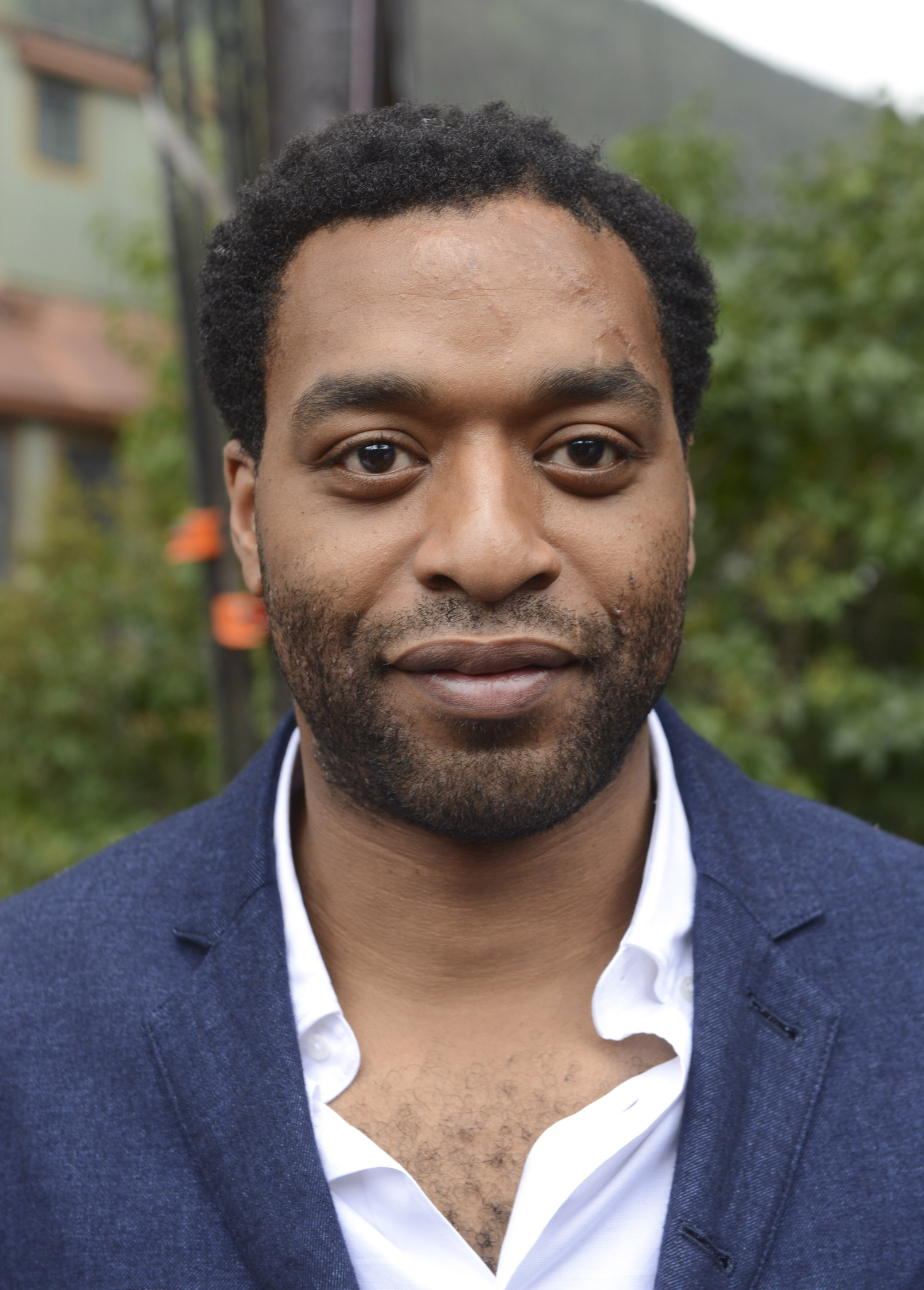
actor


director

actress



writer
